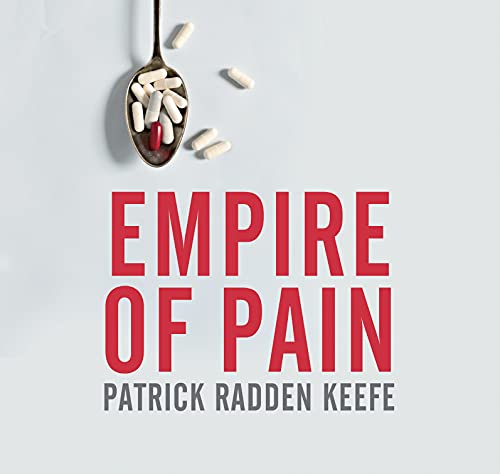
Empire Of Pain
Link to Downlload ⇒ Downlload Now!
Link to Read ⇒ Reaad Now!
Review :
Review : Patrick Radden Keefe is the best writer I have read in a long time. You finish all 452 pages and you know very well the story could never have been more succinct, more tight: it’s perfect. Three Jewish brothers, sons of immigrants, are intelligent, enterprising, and devoted. One of them, Arthur Sackler, is attentive to dilemmas of mental patients and appalled at the lack of medical interventions to alleviate pain. His research led to the invention of Valium and eventually, Oxycontin. Arthur bought a pharmaceutical manufacturing company (Purdue),and brothers Mortimer and Raymond would manage it. As time evolves both the pain treatment world and the development of drugs to treat pain, Purdue folks realize that oxy condone seemed to prescribing physicians as less threatening than traditional morphine; earlier Bayer had manufactured heroin as morphogenetic without the pesky side effects—-even though heroin was more powerful and just as addictive. This is really a turning point in the narration of the opiod crisis story: Purdue executives decide to follow a similar strategy and they begin to exploit the misunderstanding that oxy was less strong, more safe. In those days, doctors knew what they knew about oxy based on Percocet in which a very small dose of oxycodone is combined with acetaminophen or aspirin. The company for reasons of profit and sales decides to enhance the product’s appeal to doctors by pushing it for non-malignant pain—-forms of chronic pain because, after all, who doesn't have some of that? So the appeal expanded far beyond cancer patients—-not only would its use become widened for all sorts of patients (even juveniles), but the dosage could be increased. And so it was. The relationships with doctors in the field, the Food and Drug Administration, and the countless museums which benefitted from Sackler generosity weaves a very tangled web of unchecked capitalism and moral poverty. Purdue decided to create a special coating which would minimize the risk of addiction—or perhaps remove that risk altogether. This unique “improvement†would eliminate the risk of serious addiction (when is addiction NOT serious?) so that the wedding of the opium poppy and pain management could be obtained without danger. The sales and marketing of the product and the wooing of doctors is the most sorrowful chapter of unfettered capitalism: people started dying from overdoses. There is something odd about “the guns-don’t- kill people; people- kill- people†thinking here—-the Sacklers claimed addicts misused the product and truly, it could not be seen as their fault nor their responsibility. Most of us would remember Big Tobacco litigation and walking a mile for a Camel or the Marlboro Man: now the Purdue company was spending millions per month on litigation, but that litigation was seen as an annoyance at best. A photographer widely recognized for her artistic expression and product, Nan Goldin, developed a painful case of tendinitis in a wrist and a doctor prescribed OxyContin. The drug felt to her “like a padding between you and the world.†For three years she took the pills, always upping the ante and taking more and more. She overdosed. She was hooked, and she knew it, so at the age of 62, she checked herself into a rehabilitation facility of great repute and began a journey to sobriety. In 2017, she read an article in the New Yorker magazine about the opiod crisis which mentioned the drug developed by the Sacklers and their company which painted a picture in stark contrast between their generosity in the world of culture and their —-well, depravity—-their source of Great Wealth. A Chair of Psychiatry at the esteemed Duke University noted that the Sackler name is known as the source of good and philanthropic work, but actually those gifts and their fortune come to us as the result of the millions of people who are addicted to their product. Phillip Radden Keefe was the writer of the magazine article. As a result of the readership of the magazine and the compelling content of the article (we all know the New Yorker doesn’t limit its writers—that the magazine tells the whole story), the Sackler family came under ever increasing scrutiny for their role in the opiod crisis. Nan Goldin arranged for protests in some of the very museums once blessed with Sackler funds and she just would not stop. Nor would Keefe: he interviewed Purdue employees and saw Denial in the lot of them; the reader of this expose will see Greed as the driving principle. This books calls into question the entire scheme—-advertisers and marketers, wholesalers, doctors who wrote the scripts, and the pharmacies who carried the drug. The only whistleblower who emerges from the entire dreadful Mess is Patrick Radden Keefe himself. Read this book if you want another example of how unfettered capitalism contains the seeds of its own destruction: sorrowful.
0 comments:
Post a Comment