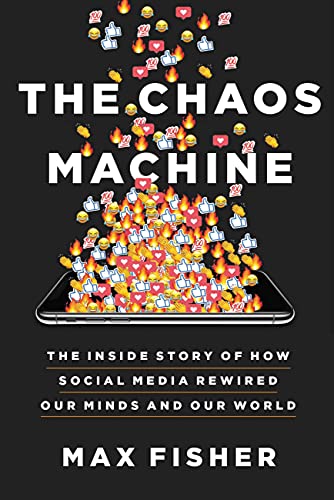
The Chaos Machine: The Inside Story of How Social Media Rewired Our Minds and Our World
Link to Downlload ⇒ Downlload Now!
Link to Read ⇒ Reaad Now!
Review : From a New York Times investigative reporter, this “authoritative and devastating account of the impacts of social media†( New York Times Book Review )   tracks the high-stakes inside story of how Big Tech’s breakneck race to drive engagement—and profits—at all costs fractured the world. The Chaos Machine is “an essential book for our times†(Ezra Klein). We all have a vague sense that social media is bad for our minds, for our children, and for our democracies. But the truth is that its reach and impact run far deeper than we have understood. Building on years of international reporting, Max Fisher tells the gripping and galling inside story of how Facebook, Twitter, YouTube, and other social network preyed on psychological frailties to create the algorithms that drive everyday users to extreme opinions and, increasingly, extreme actions. As Fisher demonstrates, the companies’ founding tenets, combined with a blinkered focus on maximizing engagement, have led to a destabilized world for everyone. Traversing the planet, Fisher tracks the ubiquity of hate speech and its spillover into violence, ills that first festered in far-off locales, to their dark culmination in America during the pandemic, the 2020 election, and the Capitol Insurrection. Through it all, the social-media giants refused to intervene in any meaningful way, claiming to champion free speech when in fact what they most prized were limitless profits. The result, as Fisher shows, is a cultural shift toward a world in which people are polarized not by beliefs based on facts, but by misinformation, outrage, and fear. His narrative is about more than the villains, however. Fisher also weaves together the stories of the heroic outsiders and Silicon Valley defectors who raised the alarm and revealed what was happening behind the closed doors of Big Tech. Both panoramic and intimate, The Chaos Machine is the definitive account of the meteoric rise and troubled legacy of the tech titans, as well as a rousing and hopeful call to arrest the havoc wreaked on our minds and our world before it’s too late. Read more
Review : This isn't the first book written about the negative effects of social media on individuals and society, but it's one of the most important. For a start the author's sources are as unimpeachable as you're likely to find. They include the likes of former Silicon Valley venture capitalists, Google and Facebook engineers, and people who held leadership positions for these and other companies. The things you learn come directly from the people who enabled and created the very algorithms which are at the root of the problems we face (rampant promoting of misinformation and divisive content, encouraging anger and outrage, etc.) You learn not just what the algorithms do but why they were set up that way. That in the end, Facebook, Google, Twitter and others make their money by blindly assuming that algorithms which train users to spend more and more time on their platforms, is not only good for their bottom line, but good for users. This despite strong evidence that — by design — their systems tap into human addiction mechanisms and psychology, in ways that make us more and more unhappy, the further down the rabbit hole we go. Perhaps most astonishing is the fact that the algorithms have become so automated, that if you ask Facebook and Google today how it works, they will flat out tell you that they don't know. While this may give them some feeling of plausible deniability it does nothing to diminish their responsibility for the harmful impacts of their technology. Equally important as the sourcing and detailed reporting, the author's writing style is quite approachable. So even if you're not technically inclined, you won't get left behind. He does not rely on a lot of technical jargon or concepts to get his points across, which is important when targeting a broad audience. Highly recommended. (And hoping this book ends up in many collegiate classrooms where it can help inform tomorrow's engineers and CEOs.)
0 comments:
Post a Comment